
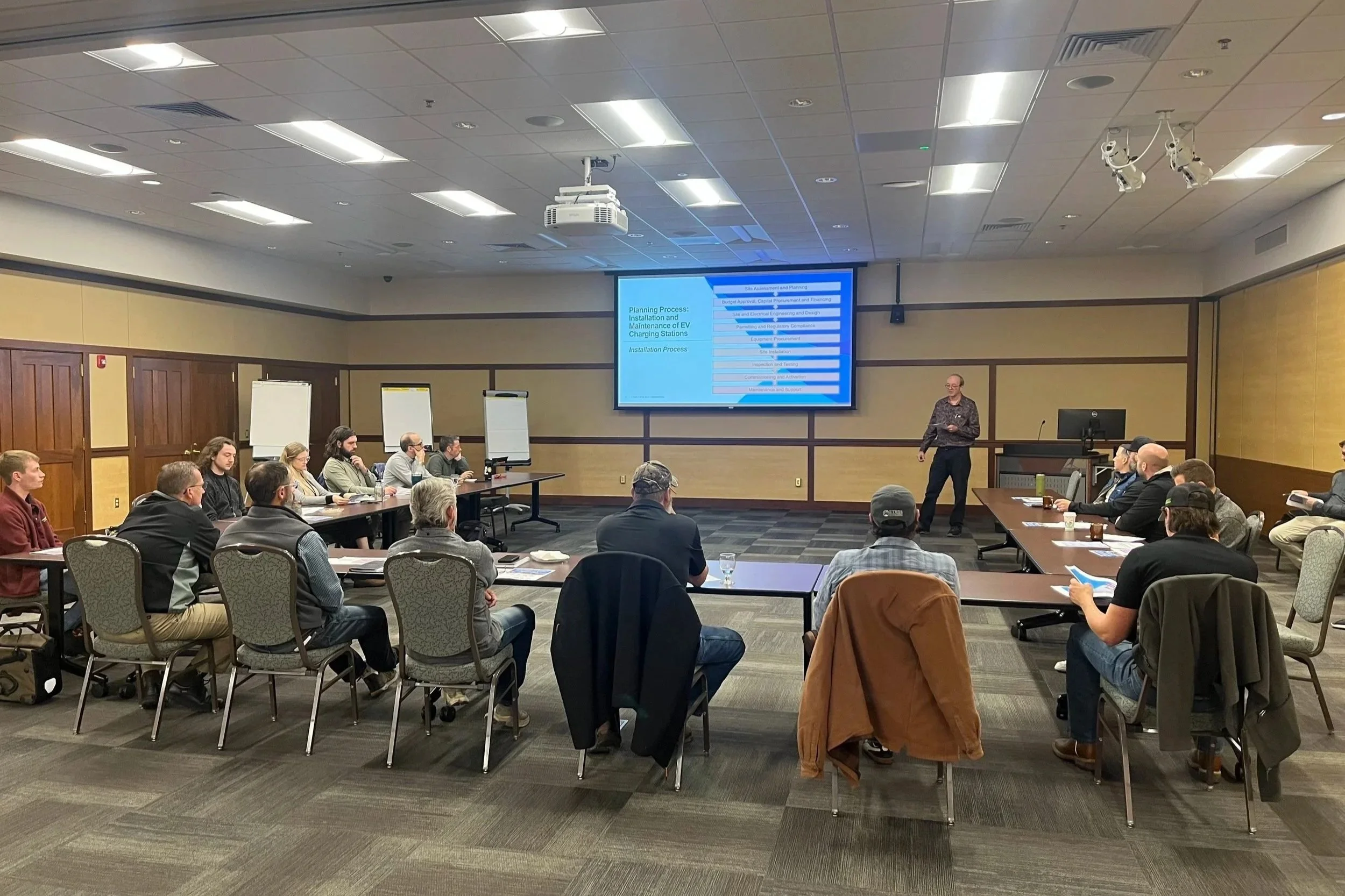
The City of La Crosse sponsored a workshop on October 21 for businesses and organizations considering the use of EVs in their fleet operations. The workshop was titled “Driving the Transition: Preparing Fleets for the EV Future” and had over 20 attendees representing 10 organizations from both the public and private sectors.
The interactive session featured industry experts discussing how to plan for the advantages of using EVs for fleets in the future. The attendees were divided into 3 breakout groups after the presentations to test their interest in using EVs for commercial or fleet operations, as well as capture the questions and challenges they see resulting from the transition. The information from the workshop is being used in two ways: to provide ongoing information and education about advancements in EV technology that addresses some concerns, and to use the group’s feedback so the city can generate and provide additional resources to help those hoping to make the transition.
The presenters included Jeff Springer, Director, Innovation and Efficient Electrification for Dairyland Power Cooperative; Matt Biren, WI Commercial EV Account Manager for Xcel Energy; and Adam Schwartz, EV Program Manager for Kwik Trip.
Jeff provided an excellent overview of the current state of the EV market. He highlighted that there are 50 EVs currently available in the US market. These include small cars, full-size trucks, and vans, with prices from $35,000 to $150,000. Some have a driving range of up to 450 miles on a charge.
He listed several advantages of using EVs for fleet vehicles:
Quiet & comfortable (the vehicle can be left on to keep the cab warm or cool as needed with no idling emissions).
Cheaper than gas engines with almost no maintenance (they still need tires, but no oil changes or spark plugs).
Jeff said there are a few considerations organizations should take into account when considering the transition to EVs.
Employee Acceptance – Will your employees embrace electric vehicles? This will require employee education efforts.
Paying for Charging - fleet credit cards may not work with the public charging stations.
The end of tax credits can be a setback or an opportunity. Ford has already reduced the price of the F150 Lightning by $4,000 to keep sales going. And other manufacturers and dealers may be offering sweet deals as the consumer market contracts, creating a buying opportunity for fleets. The used EV market is another opportunity with lightly used EVs available at substantial discounts, and some carry an 8-year, 100,000-mile warranty on the battery and drivetrain.
Matt featured all the programs that Xcel has in place to support EV charging.
Adam provided very detailed information about what’s involved with adding the infrastructure for charging stations. Topics included:
Site Assessment and Planning
Budget Approval, Capital Procurement, and Financing
Site and Electrical Engineering and Design
Permitting and Regulatory Compliance
Equipment Procurement
Site Installation
Inspection and Testing
Commissioning and Activation
Maintenance and Support
The group had a few concerns that were consistently mentioned, including infrastructure availability (is there charging when we need it?), vehicle range, and the amount of time it takes to charge a vehicle.
The attendees were surprised by some of the advancements already made to support a transition to EVs. These included the programs offered by utilities to help with installing charging stations, and that vehicle range is already reaching more impressive mileage.
The information gathered at the session will help guide the City as staff plan additional efforts to accomplish the goals for EV adoption that are part of the La Crosse Climate Action Plan. The plan specifies partnering with fleet operators and transit providers to work towards a goal that buses and fleets based and operating in La Crosse are 50% electric by 2030 and 100% by 2035.